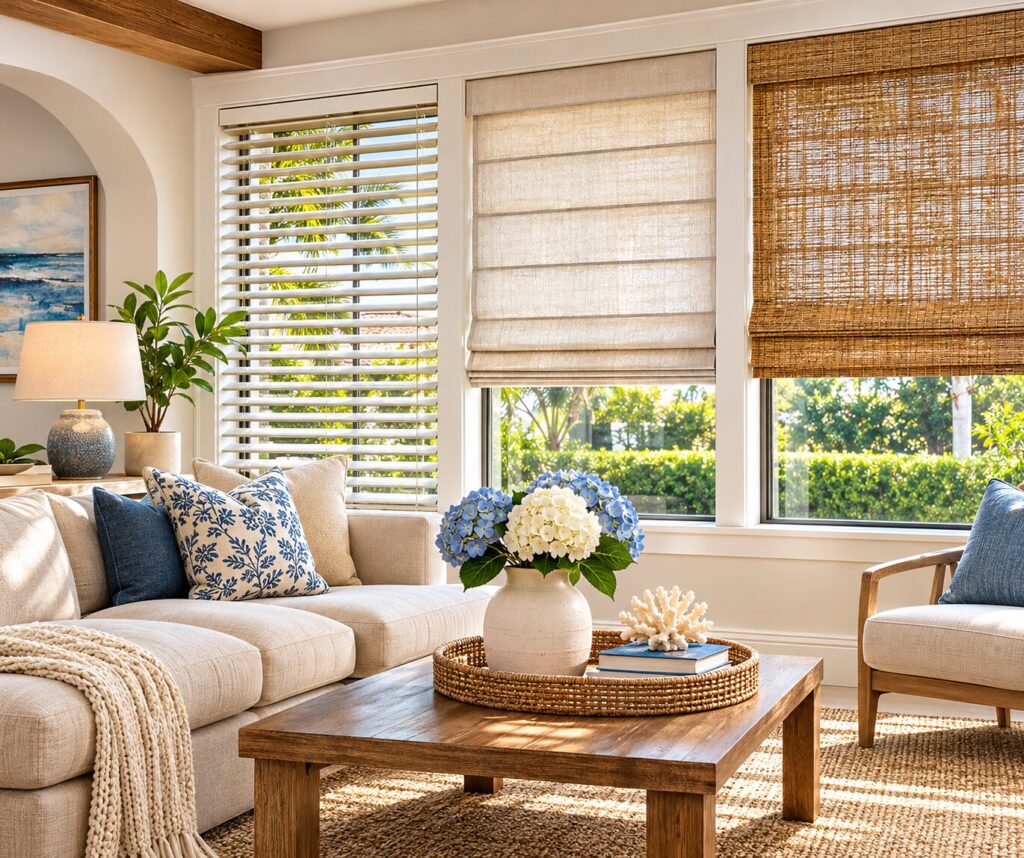
Furniture may be the first thing you notice when you walk into a room, but window treatments have just as much influence on how the space feels.
Blinds, shades, shutters, furniture, flooring, and wall colors all share the same visual space. When they work together, a room feels coordinated and intentional. When they compete with one another, even attractive individual pieces can make the space feel disconnected.
For homeowners choosing custom window treatments in Orange County, the goal should not simply be finding something that covers the glass. The window treatment should complement the furniture, manage sunlight and privacy, and fit the way the room is used every day.
So when should you choose blinds, and when are shades the better fit?
Start With the Furniture You Already Have
Before choosing a window treatment, look around the room.
What materials, colors, and shapes already dominate the space?
A room filled with natural wood furniture may work beautifully with wood or faux wood blinds. A softer living room with upholstered seating, textured pillows, and layered fabrics may feel more balanced with fabric shades.
Consider:
- Furniture color
- Wood tones
- Upholstery
- Flooring
- Wall color
- Rugs
- Metal finishes
- Overall decorating style
Window coverings do not need to match the furniture exactly. In fact, trying to make every finish identical can make a room feel overly coordinated.
Instead, look for a visual relationship between the treatments and the rest of the space.
Home Time Furniture’s guide to style tips for contemporary living room furniture offers a useful reminder that proportion, texture, color, and balance all contribute to a successful room.
When Blinds Work Well With Furniture
Blinds have a structured appearance.
Their horizontal or vertical slats create defined lines at the window, making them a natural match for rooms with clean furniture shapes and straightforward styling.
Homeowners researching blinds Orange County options may want to consider wood, faux wood, horizontal, and vertical blinds depending on the room and window.
Wood Blinds
Wood blinds can work especially well when the room already contains:
- Hardwood flooring
- Wood dining tables
- Wood cabinetry
- Natural furniture
- Traditional or transitional décor
The wood does not have to match perfectly.
For example, a medium-toned blind can coordinate with darker furniture while still creating enough contrast to prevent the room from feeling too uniform.
Faux Wood Blinds
Faux wood blinds can provide a similar visual structure while offering another material option.
Light-colored faux wood blinds can blend easily with pale walls, white cabinetry, and neutral furniture.
They can be particularly useful when you want the window treatment to feel clean and understated rather than becoming the focal point of the room.
Use Window Shades to Soften Heavier Furniture
Shades create a very different feeling.
Because they are typically fabric-based, they can introduce softness into rooms with heavier furniture, darker woods, substantial sofas, or strong architectural features.
For homeowners comparing Orange County window shades, the available styles can range from sleek roller shades to textured woven shades and decorative Roman shades.
Roman Shades
Roman shades work beautifully when you want the window treatment to contribute fabric, pattern, or color.
They can soften rooms dominated by hard materials such as:
- Wood tables
- Stone surfaces
- Metal lighting
- Hardwood floors
- Large case goods
A subtle Roman shade can balance those elements without competing with them.
Cellular Shades
Cellular shades provide a quieter look.
Their simple pleated surface can work well when the furniture already provides plenty of visual interest.
Woven Shades
Natural woven shades can complement wood furniture, rattan seating, coastal décor, and organic textures.
They are especially effective when you want the windows and furnishings to share a natural, relaxed feeling.
Match Wood Blinds With Furniture Without Making Everything Identical
One of the easiest mistakes to make is trying to match every wood finish exactly.
That is usually unnecessary.
A room can contain several related wood tones and still feel cohesive.
For example:
- Dark dining furniture can work with medium-tone blinds.
- Light oak furniture can pair with white or natural blinds.
- Warm wood floors can coordinate with neutral faux wood treatments.
- Dark blinds can provide contrast against pale furniture.
Think in terms of warm versus cool undertones rather than identical finishes.
Furniture placement matters too. Home Time Furniture’s article on contemporary living room furniture arrangement provides useful ideas for organizing the room as a whole.
The window treatment should remain easy to operate even when sofas, chairs, tables, or consoles are positioned nearby.
Think About How Much Visual Weight the Room Already Has
Some rooms have a lot happening visually.
Patterned rugs, colorful artwork, textured furniture, bold pillows, and decorative lighting can make a room feel lively and layered.
In those spaces, simpler window treatments often work best.
Neutral roller shades, cellular shades, or understated blinds can provide function without adding another competing element.
Other rooms may be very minimal.
A neutral sofa, simple flooring, and plain walls can provide an opportunity for the windows to contribute more character.
That might mean:
- Woven shades
- Patterned Roman shades
- Rich wood blinds
- A stronger color
- Layered fabric treatments
The window covering should help balance the room rather than automatically becoming either invisible or dominant.
Coordinate Color With Furniture and Accessories
Color provides another way to connect window treatments with furnishings.
You do not have to use the exact same shade throughout the room.
Instead, repeat a color already present somewhere else.
For example, blue window shades might coordinate with:
- Throw pillows
- Artwork
- A patterned rug
- Dining chairs
- Decorative accessories
Home Time Furniture’s article on using blue in contemporary living room furniture demonstrates how repeating a color in different parts of a room can create continuity.
The same principle applies to window treatments.
A small amount of repeated color can connect the windows to the furniture without making the design feel overly matched.
Consider Natural Light Before Choosing Based on Style Alone
Window treatments need to look good, but they also have a job to do.
Orange County homes can receive strong sunlight throughout much of the year.
A beautiful shade that does not provide the light control you need may quickly become frustrating.
Before making a choice, consider:
- When direct sunlight enters the room
- Whether glare is a problem
- How much privacy you need
- Whether you want to maintain an outside view
- Whether furniture receives direct sunlight
- How bright you want the room during the day
Blinds give homeowners the ability to adjust slat angles, which can be useful for redirecting natural light.
Shades provide varying levels of light filtering depending on the fabric and design.
The right choice should balance the room’s appearance with the practical needs of the space.
Living Rooms Often Need Flexibility
Living rooms tend to serve several purposes.
They may be used for:
- Conversation
- Watching television
- Entertaining
- Reading
- Relaxing
- Family time
That means the ideal amount of light can change throughout the day.
Blinds allow homeowners to adjust slats without fully raising the treatment.
Layered shades can shift between sheer and more covered positions.
Solar or roller shades can help reduce glare.
Roman and woven shades can add more decorative character.
A good living-room window treatment should work with both the furniture layout and the way the space is actually used.
Dining Rooms Can Handle Stronger Design Choices
Dining rooms often provide more freedom to make the window treatment part of the design.
Wood blinds can coordinate beautifully with a dining table or cabinetry.
Roman shades can introduce fabric and pattern.
Woven shades can add texture.
Shutters can create architectural structure.
Because dining rooms are often visually centered around the table, chairs, and lighting, window treatments should support those elements rather than compete with them.
A darker blind or shade might frame a room with lighter furniture, while a pale treatment may balance a dining area filled with darker wood.
Bedrooms Usually Prioritize Privacy and Comfort
Furniture is still important in bedrooms, but privacy and light control often become the stronger considerations.
A bedroom with upholstered furniture and soft bedding may pair naturally with Roman or cellular shades.
Wood blinds may work beautifully in a room with wood furniture and traditional styling.
The best choice depends on whether you want:
- Softer filtered light
- Greater privacy
- More room darkening
- Adjustable slats
- Fabric texture
- A cleaner architectural appearance
The window treatment should support the relaxing atmosphere of the bedroom rather than feeling like an unrelated addition.
Smaller Rooms Benefit From Simpler Window Treatments
In a smaller room, visually heavy window treatments can make the space feel more crowded.
Simple blinds or shades in lighter colors can help maintain a more open appearance.
This is especially useful when the furniture itself already occupies much of the available visual space.
A compact living room with a sofa, chairs, tables, and shelving may not need a highly decorative window treatment.
Home Time Furniture’s article on spicing up a small modern living room offers additional ideas for balancing style and function when space is limited.
Should Every Room Use the Same Window Covering?
No.
Using the same treatment throughout an entire home can create consistency, but it is not the only way to achieve a cohesive design.
Different rooms have different functional needs.
A home might use:
- Faux wood blinds in the kitchen
- Roman shades in the dining room
- Cellular shades in bedrooms
- Plantation shutters in the living room
- Solar shades in a home office
The treatments can still feel connected through similar colors, wood tones, textures, or finishes.
This room-by-room approach allows homeowners to choose the most functional solution without sacrificing an overall sense of design.
Blinds or Shades: Which Should You Choose?
Choose blinds when you prefer:
- Adjustable slats
- Structured lines
- Wood or faux wood finishes
- Flexible direction of incoming light
- A classic window treatment
Consider shades when you prefer:
- Softer materials
- Fabric or woven texture
- Decorative patterns
- Different levels of light filtering
- A treatment that can largely disappear when raised
Neither category is automatically better.
The right choice depends on the furniture, room design, privacy needs, sunlight, and how you use the space.
Treat the Window as Part of the Entire Room
The strongest interiors rarely look like each element was chosen independently.
Furniture, rugs, lighting, artwork, window treatments, and architectural details should all contribute to the same overall idea.
That does not mean everything needs to match.
It means each choice should make sense next to the others.
When comparing custom window treatments in Orange County, look beyond the window itself.
Consider what is sitting beneath it.
Consider the furniture across the room.
Look at the flooring, wall color, and natural light.
Then decide whether blinds, shades, shutters, or another treatment best supports the space as a whole.
Finding the Right Window Coverings for Your Orange County Home
The right window treatments can help furniture look better, improve privacy, manage natural light, and make a room feel more complete.
Homeowners can explore blinds Orange County options when adjustable slats and wood-style finishes fit the design.
For softer fabrics, natural textures, and additional light-filtering choices, compare Orange County window shades.
And for homeowners who want to compare shutters, blinds, shades, drapery, and other options together, Shutter Heaven offers a complete selection of custom window treatments in Orange County.
The best window covering is not simply the one that looks best by itself.
It is the one that makes the entire room work better together.